6 Saree Draping Styles to Try, From Classic to Modern
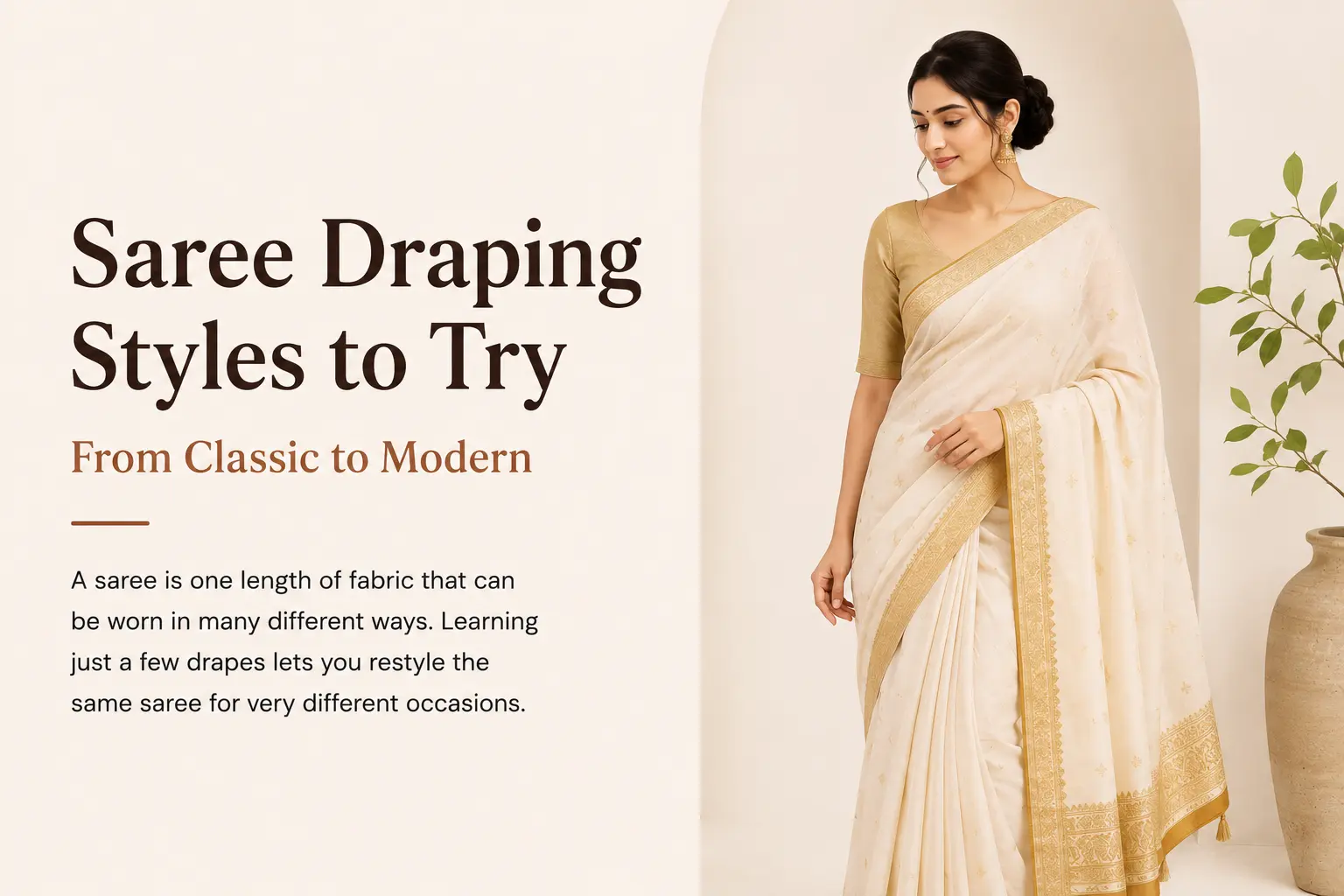
A saree is one length of fabric that can be worn a dozen different ways. Learning just a few drapes lets you restyle the same saree for very different occasions. Here are six styles worth knowing, from the everyday classic to a few modern twists.
1. The Nivi drape (the classic)
This is the most common drape and the easiest to start with. Pleats are tucked at the front and the pallu falls over the left shoulder. It suits almost every body type and every occasion, which is why it is the default for most people.
2. The Bengali drape
A traditional style with wide box pleats and the pallu brought over the right shoulder, then back over the left. It has a graceful, old-world charm and looks especially good in red and white sarees during festivals.
3. The Gujarati drape
Here the pallu comes from the back to the front over the right shoulder, so the design of the pallu is displayed across the chest. It is a lovely choice when your saree has a heavily worked pallu you want to show off.
4. The Maharashtrian (Nauvari) drape
A nine-yard saree draped like a dhoti, which allows free movement. It has strong cultural roots and makes a real statement at themed functions and festivals.
5. The pant-style drape (modern)
Swap the petticoat for a pair of fitted trousers and drape the saree over them. This contemporary look is comfortable, easy to walk in and perfect for a cocktail evening or a workplace festive day.
6. The dhoti-saree drape (fusion)
A saree draped over dhoti pants gives an edgy, fashion-forward silhouette. Pair it with a statement belt to define the waist and keep the rest of the styling minimal.
Which drape for which occasion
For daily wear and office, stick with the Nivi drape. For festivals, the Bengali and Gujarati styles shine. For parties and modern events, the pant-style and dhoti-saree drapes feel fresh. Start with the classic, get comfortable, then experiment. The saree rewards a little practice.